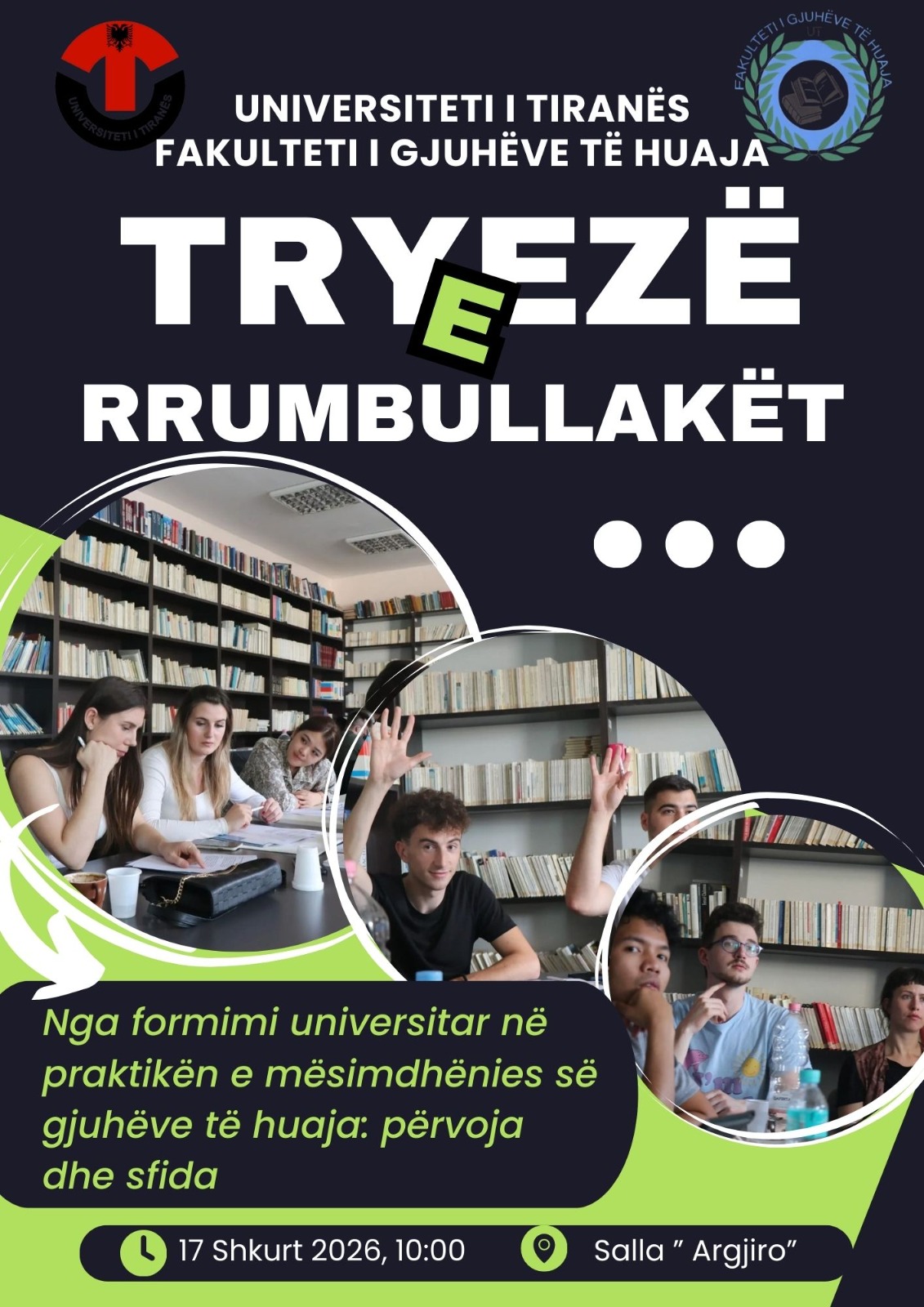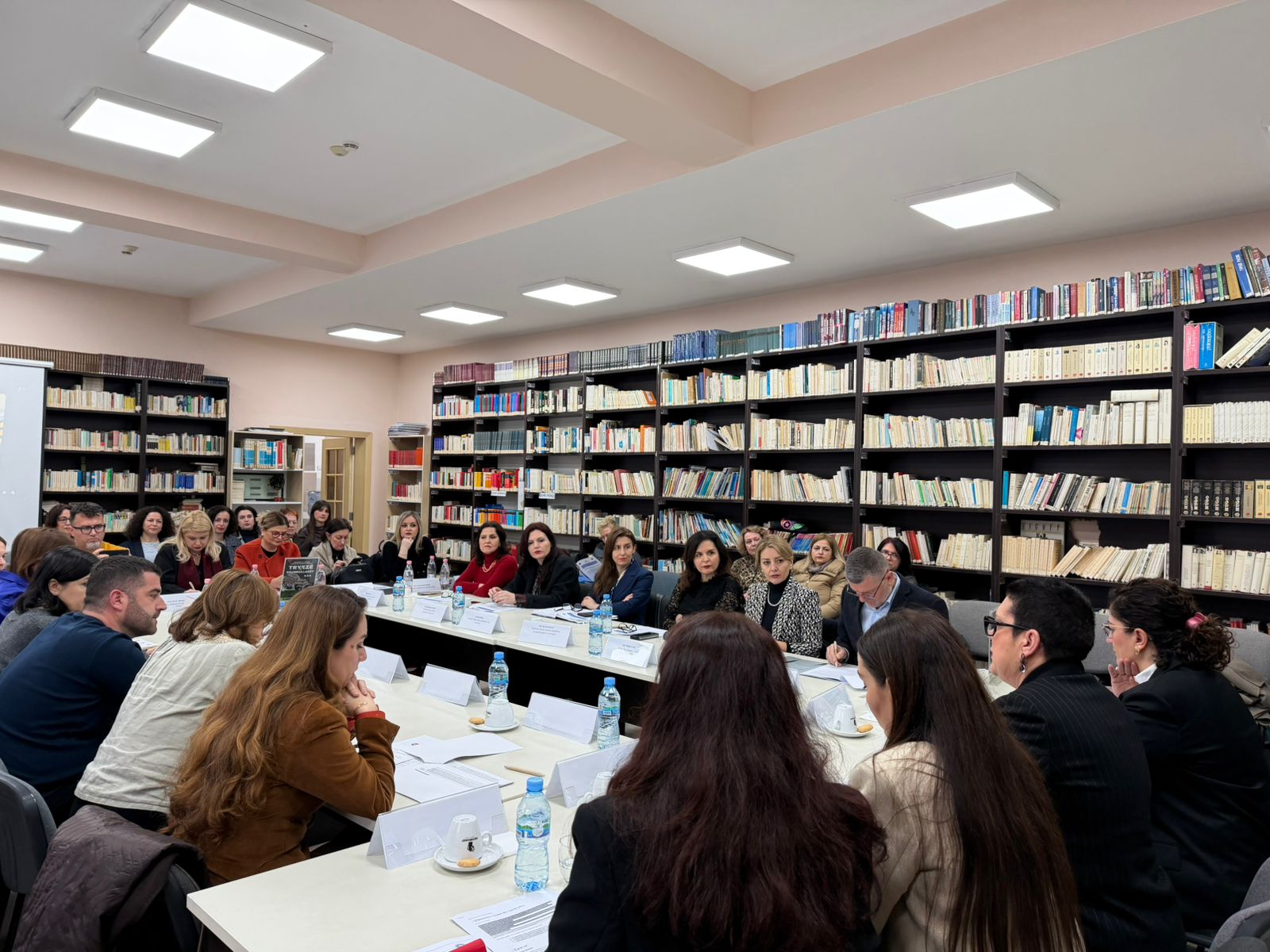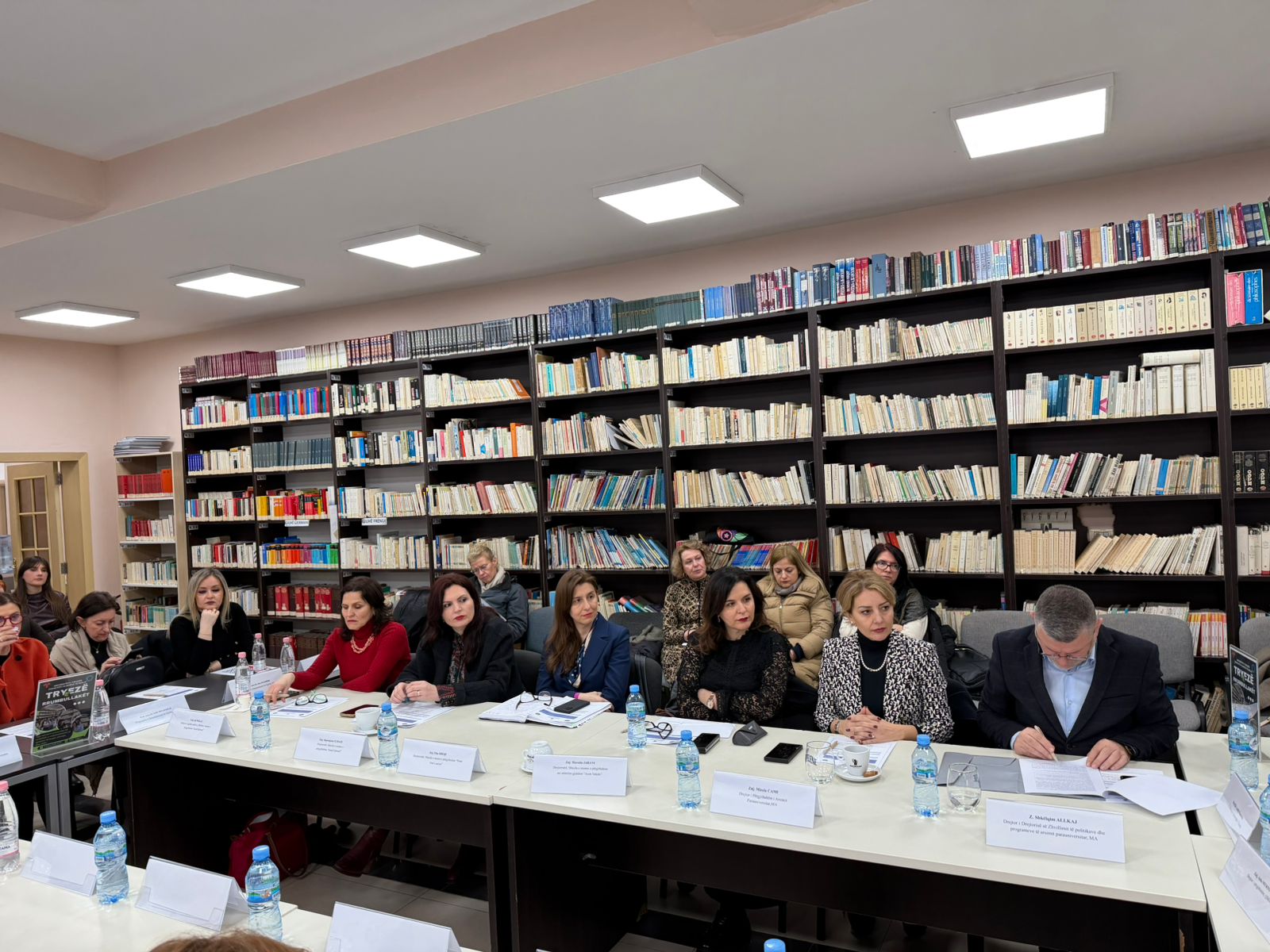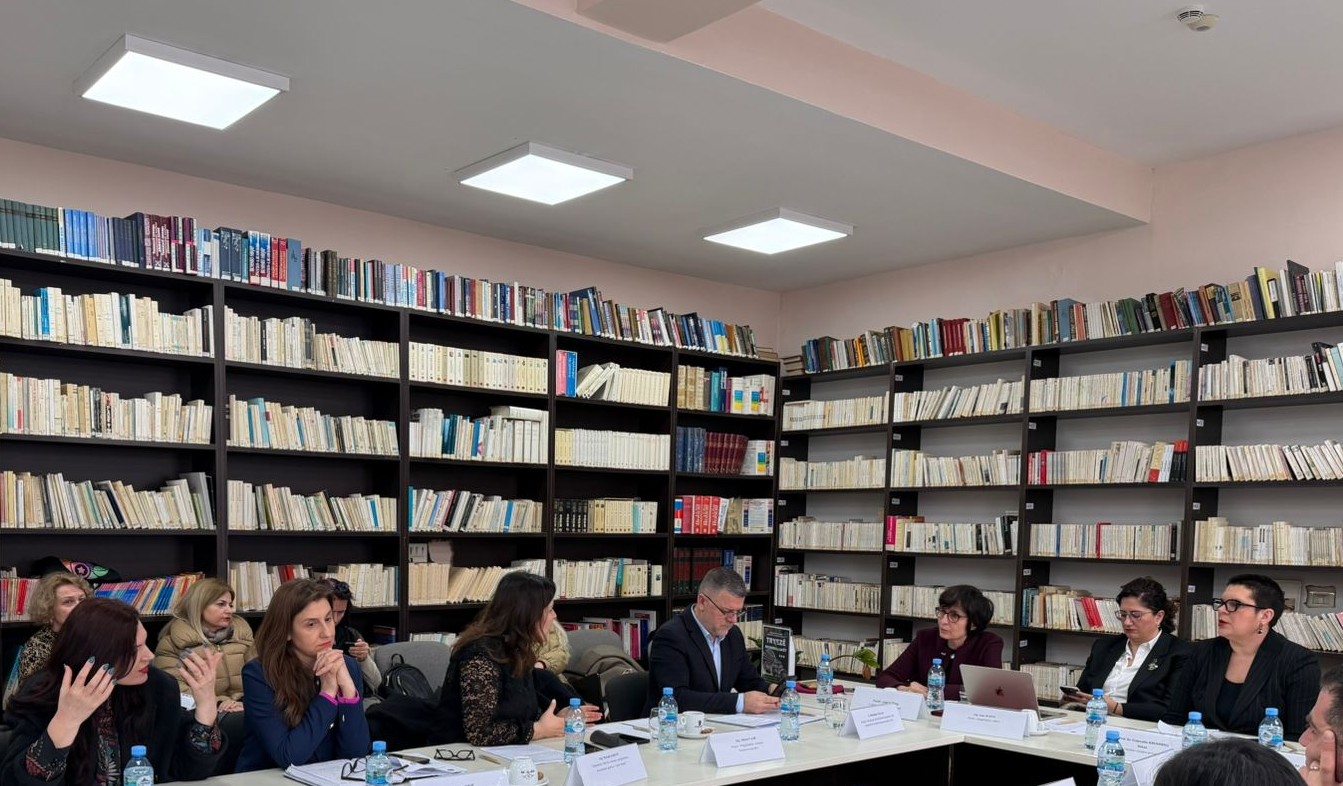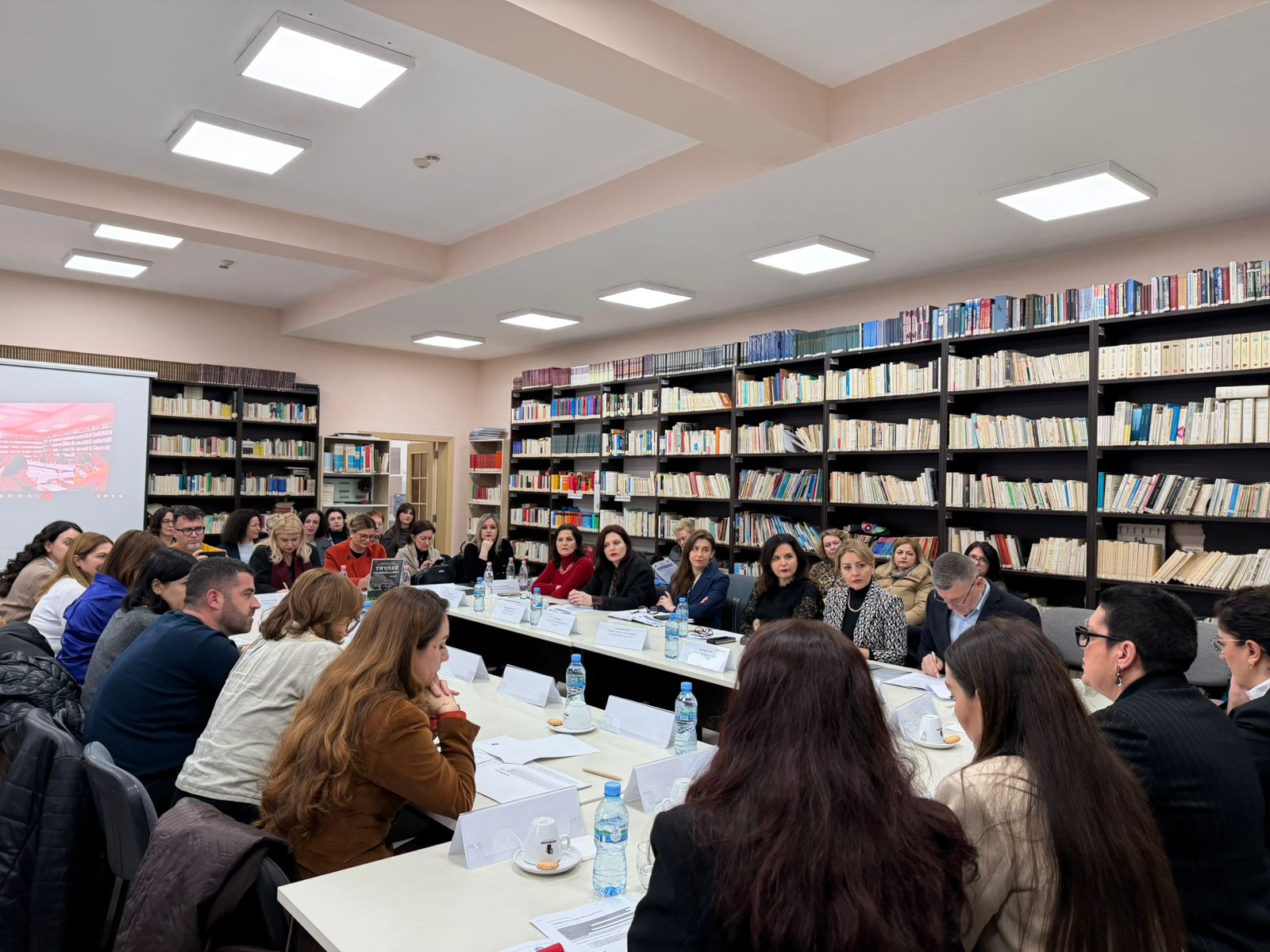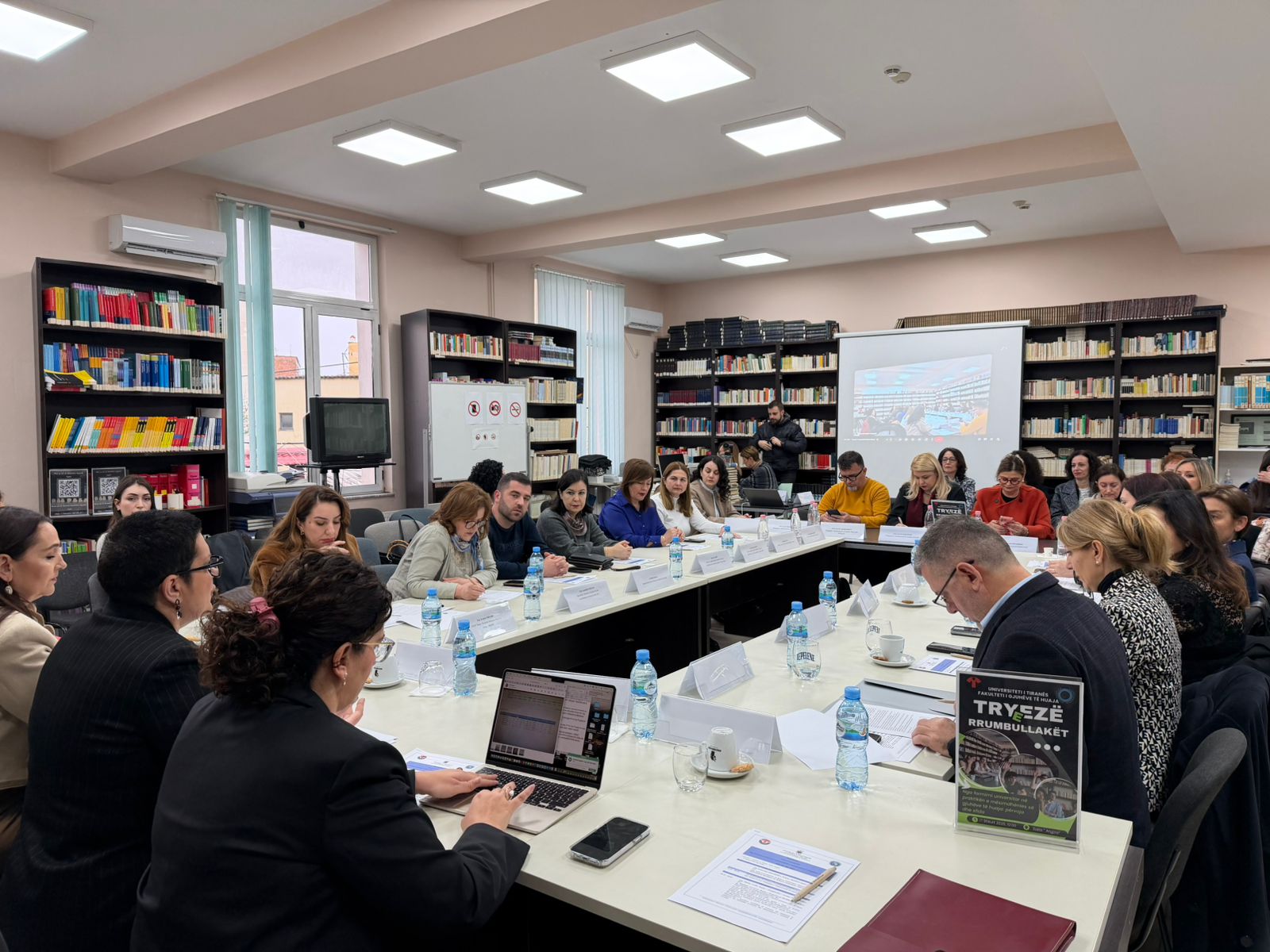

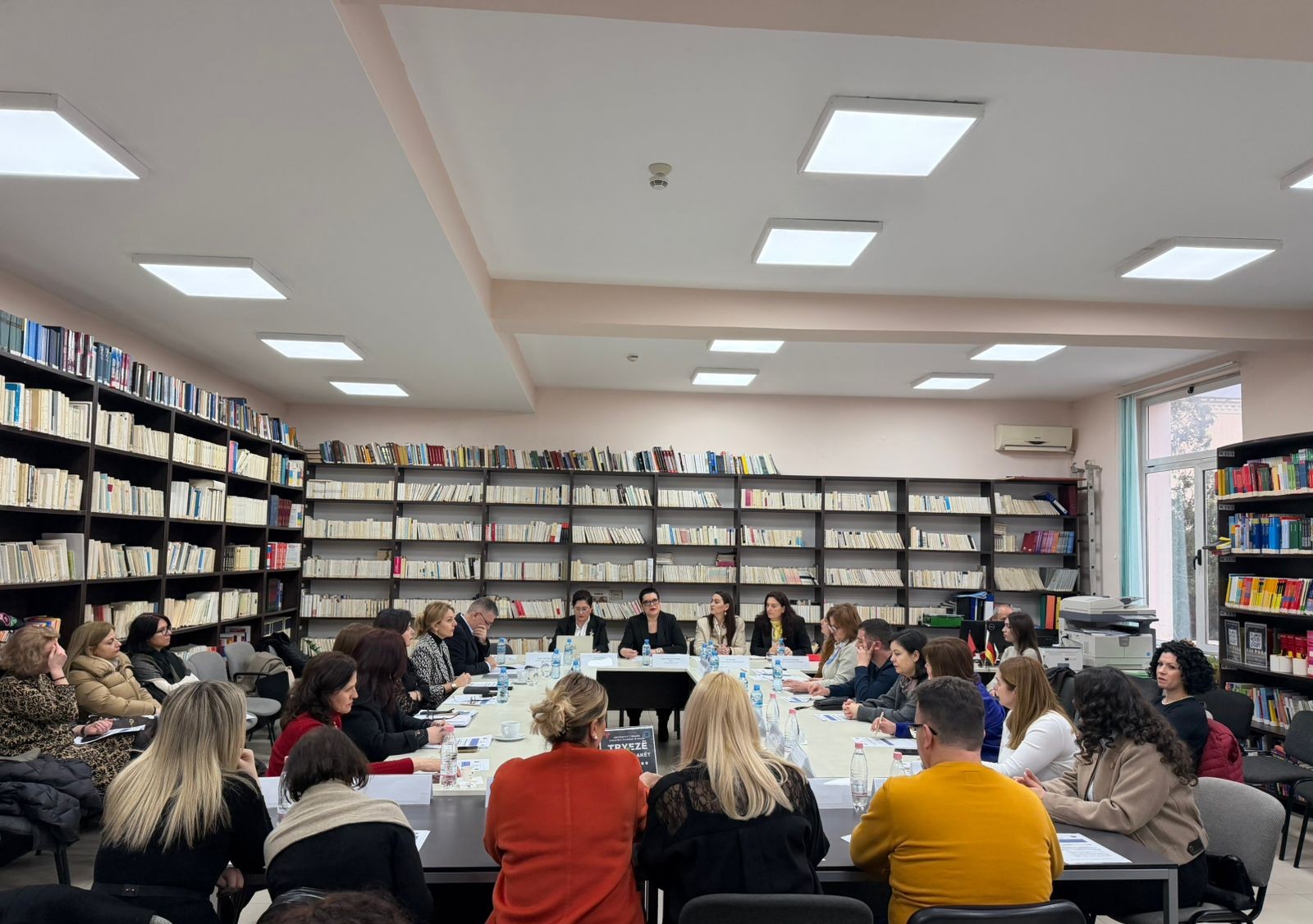
On February 17, 2026, the Faculty of Foreign Languages at the University of Tirana organized an extensive roundtable with representatives from the main pre-university education institutions, school leaders, teachers, alumni, and newly employed teachers. The aim of the event was to promote institutional dialogue on aligning university training with the realities of foreign language teaching in pre-university education.
In her opening remarks, the Dean of the Faculty of Foreign Languages, Ms. Esmeralda Kromidha, focused on the concept of multilingualism, the training of foreign language teachers as one of the pillars of the Faculty’s mission, the challenges of employing new teachers, the role of pre-university education in updating teacher training programs, and the need to align programs with European competency-based frameworks, emphasizing the importance of cooperation among all institutions present at the roundtable.
The Vice-Rector of the University of Tirana, Ms. Anila Paparisto, institutionally supported the discussions held during the roundtable, highlighting that the issues addressed affect all areas of teacher education at UT. She underlined the University of Tirana’s role in both initial and continuous teacher training, as well as the need for a proactive approach and structured, continuous inter-institutional dialogue.
The roundtable was moderated by Ms. Drita Rira, Vice-Dean of the Faculty of Foreign Languages, and Ms. Daniela Hasa, Head of the English Department.
The panel included representatives from the Ministry of Education, the Agency for Quality Assurance in Pre-University Education (ASCAP), the Center for Educational Services (QSHA), the Regional Directorate/Local Office of Pre-University Education of Tirana (DRAP/ZVAP), secondary school leaders, professional associations of foreign language teachers, experienced teachers, FGJH alumni, department heads of the Faculty of Foreign Languages, didactics colleagues, and students. Participants addressed issues of national importance concerning the training and practice of foreign language teaching.
Mr. Shkëlqim Allkaj, Director of the Directorate for Policy Development and Pre-University Education Programs at the Ministry of Education, focused on the role of foreign languages in the pre-university curriculum and its alignment with the recommendations of the Council of Europe, as well as on current initiatives and priorities within pre-university education policies. His discussion addressed both policy-level and technical aspects, tackling concrete implementation issues. He expressed his willingness to provide technical cooperation with the Faculty of Foreign Languages on the matters discussed during the roundtable
Ms. Ludmilla Stefani, from the Agency for Quality Assurance in Pre-University Education (ASCAP), addressed methodological issues observed in the field and the challenges of continuous teacher training, referring to the European competency frameworks for teachers. She also discussed the National Teacher Development Program (PKZHM), which will begin in 2026 and will include the Faculty of Foreign Languages, as part of the training of foreign language teachers by higher education institutions (HEIs). Furthermore, she emphasized the importance of preparing teachers for the digital reality and the use of artificial intelligence in teaching.
Ms. Aida Myrto, Director General of the Center for Educational Services (QSHA), presented data on candidates’ performance in the licensing exam, analyzing the coherence between university standards and professional standards, and highlighting the importance of using this data for institutional reflection.
Ms. Ermira Milori, the Regional Directorate of Pre-University/Local Office of Pre-University Education of Tirana, drew attention to the real labor market needs for foreign language teachers over the next five years, the impact of demographic changes on planning these needs, and the challenges faced by new teachers during their first years of work. She emphasized the need for greater synergy between universities and the school mentoring system to ensure that teaching practice is more structured and well-supported.
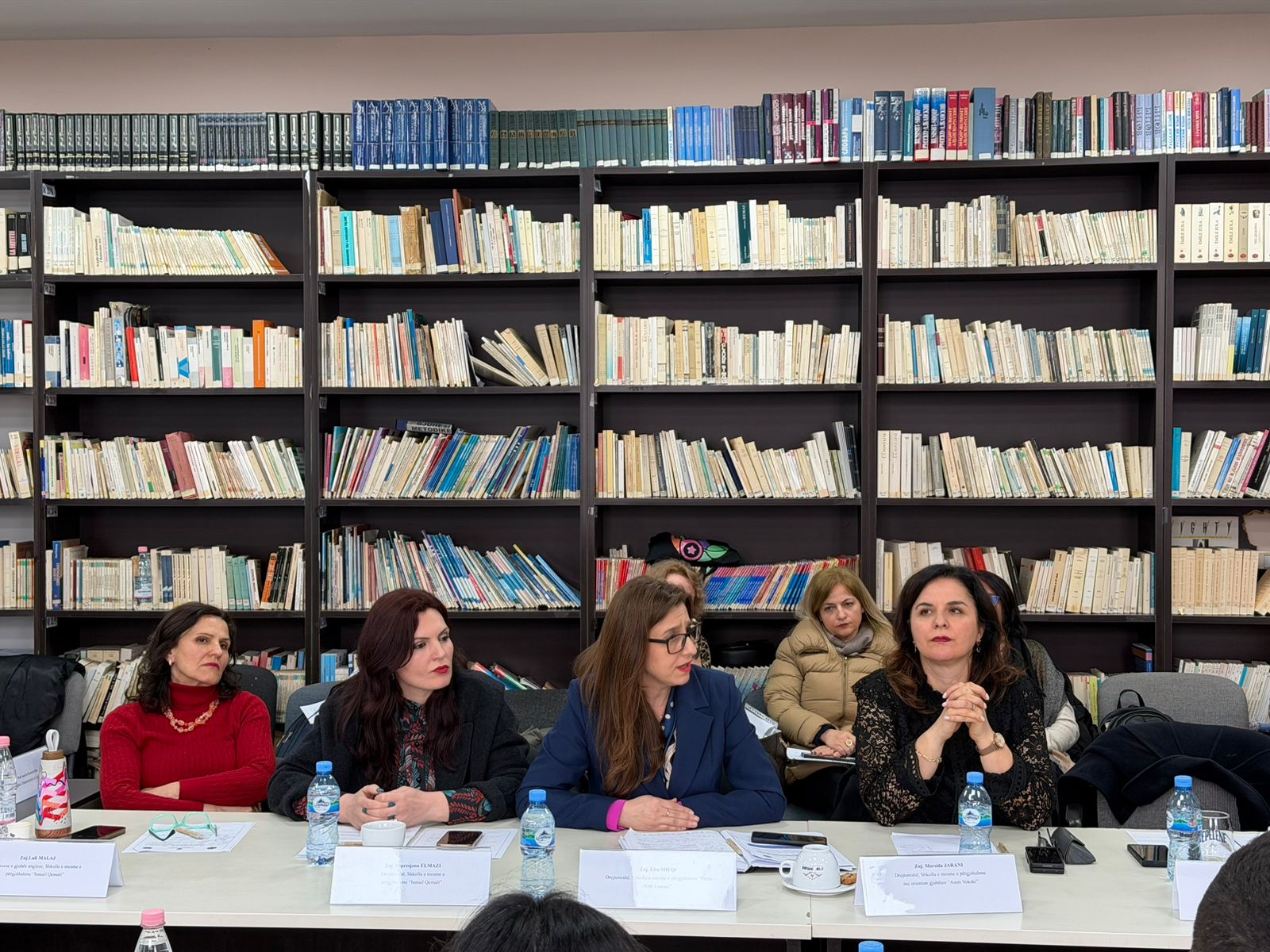
Upper Secondary school leaders – Ms. Elsa Sheqi (“Petro Nini Luarasi”), Ms. Shpresjona Elmazi (“Ismail Qemali”), and Ms. Marsida Jarani (“Asim Vokshi”) – focused on contemporary curriculum practices, classroom management, social competencies, the use of technology, and concrete expectations regarding university training.
Ms. Orjola Idrizi, Director of the Institute for Deaf Students, addressed the dimension of inclusive education and the need for the academic and professional continuity of deaf students, focusing on their preparation as future foreign language teachers.
Representatives of professional associations – Ms. Lindita Trashani and Mr. Drilon Murrja – highlighted the role of associations in the professional development of teachers and in building sustainable school–university–association collaboration models.
Experienced teachers, alumni, and newly employed teachers also contributed to the discussion, identifying the gap between theory and practice during professional internships, as well as the need for structured mentoring and support during the early years of teaching. New teachers also pointed out issues with teaching methods and textbooks, emphasizing the need to update them in line with recent developments, particularly in methodological and digital aspects.
Conclusions
At the conclusion of the roundtable, the importance of strengthening structured dialogue between universities and the institutions responsible for policies, standards, and licensing was emphasized, with the aim of continuously improving the quality of foreign language teacher training in Albania.
The recommendations arising from these discussions will be compiled in a final document and officially submitted to the Ministry of Education as concrete suggestions within the framework of institutional dialogue for the further improvement of teacher training and professional practice in foreign language education.