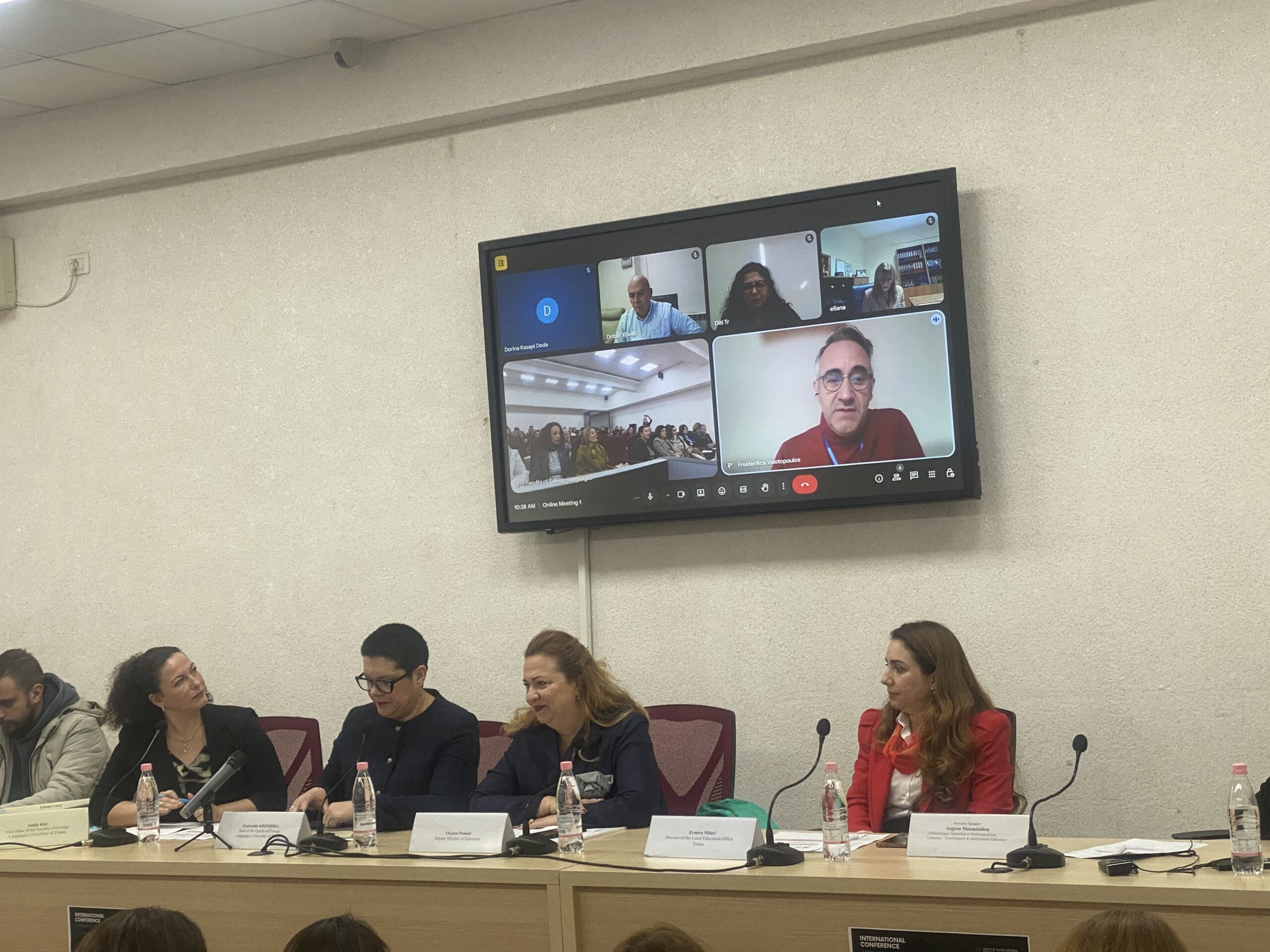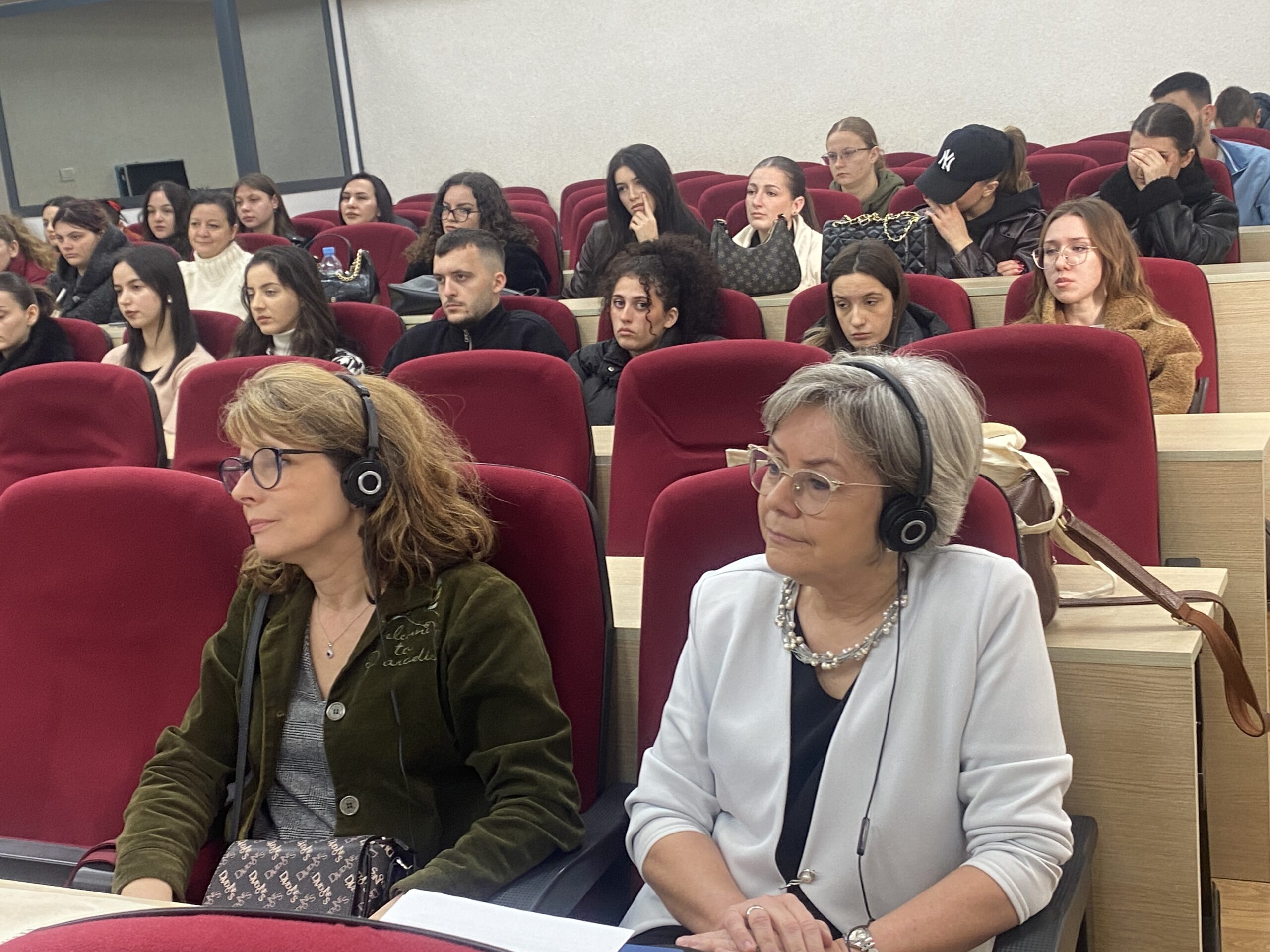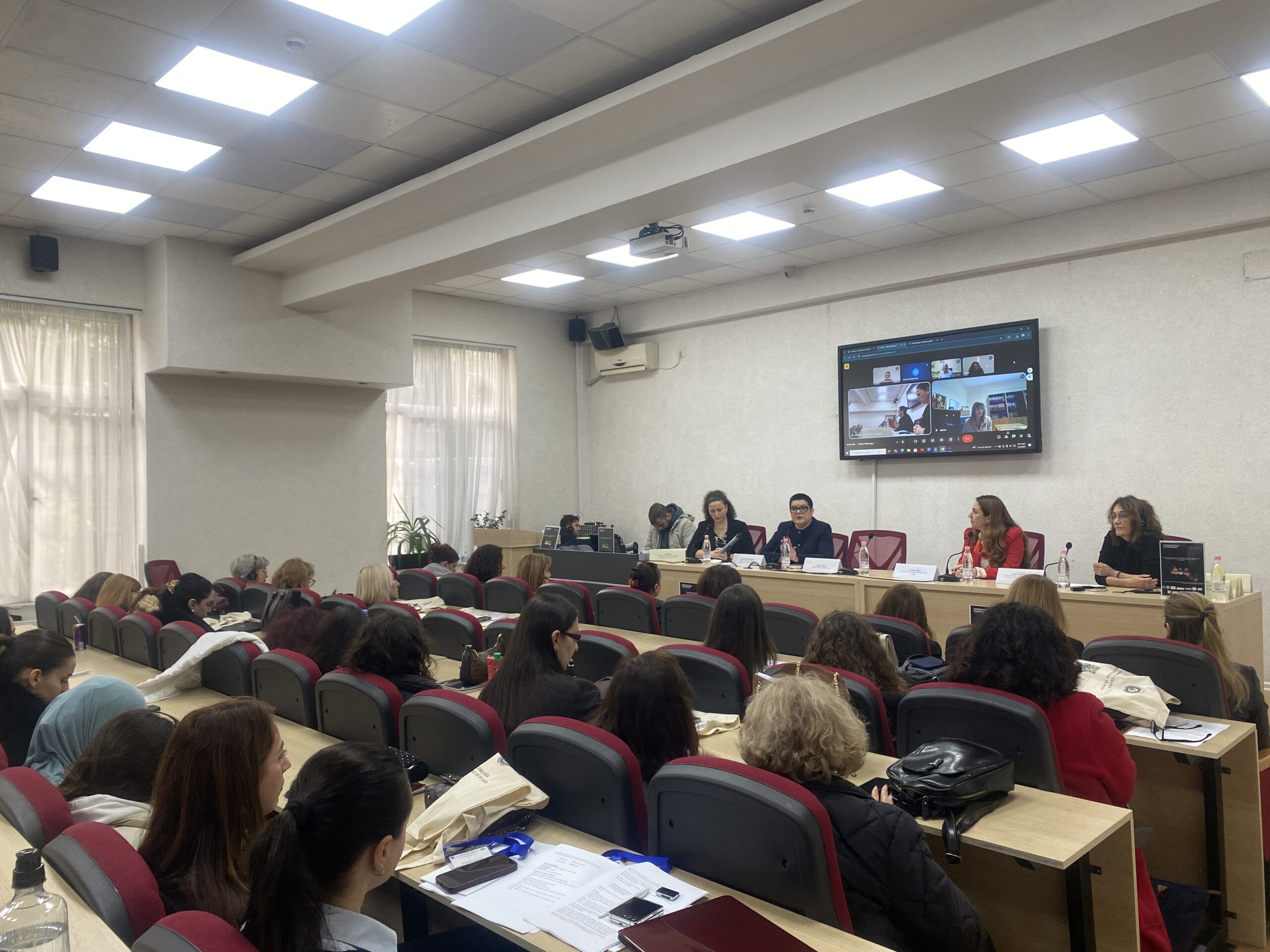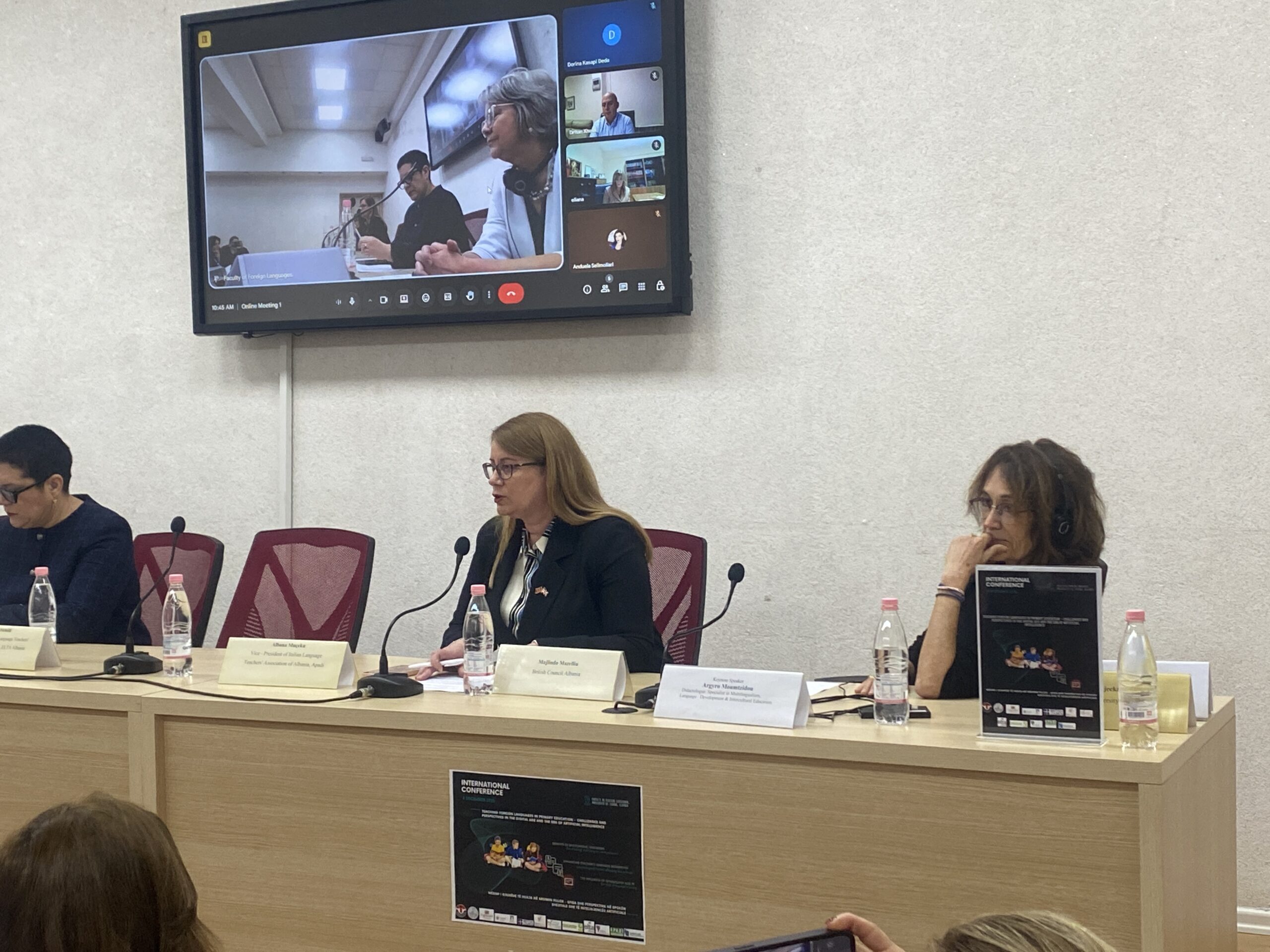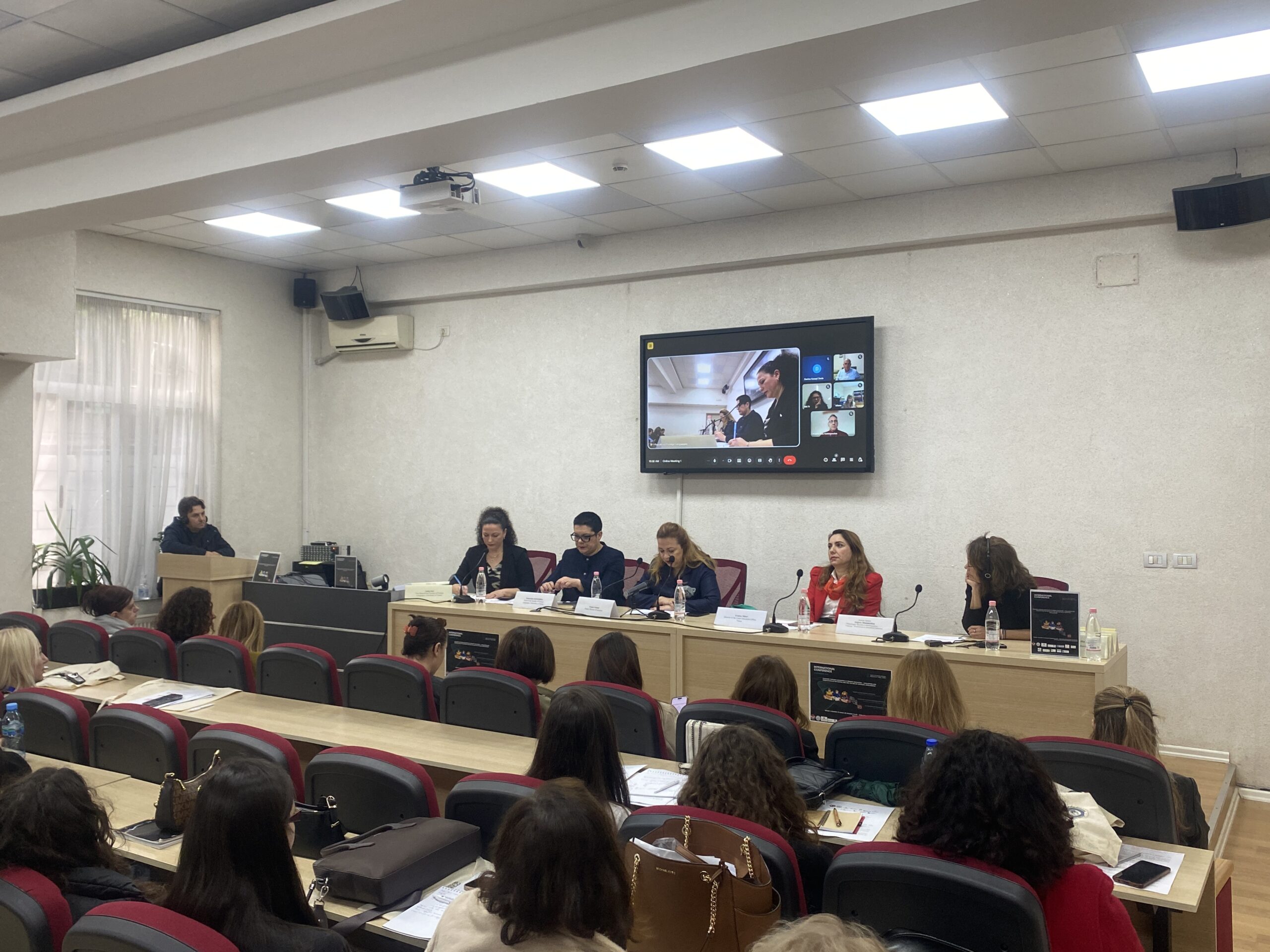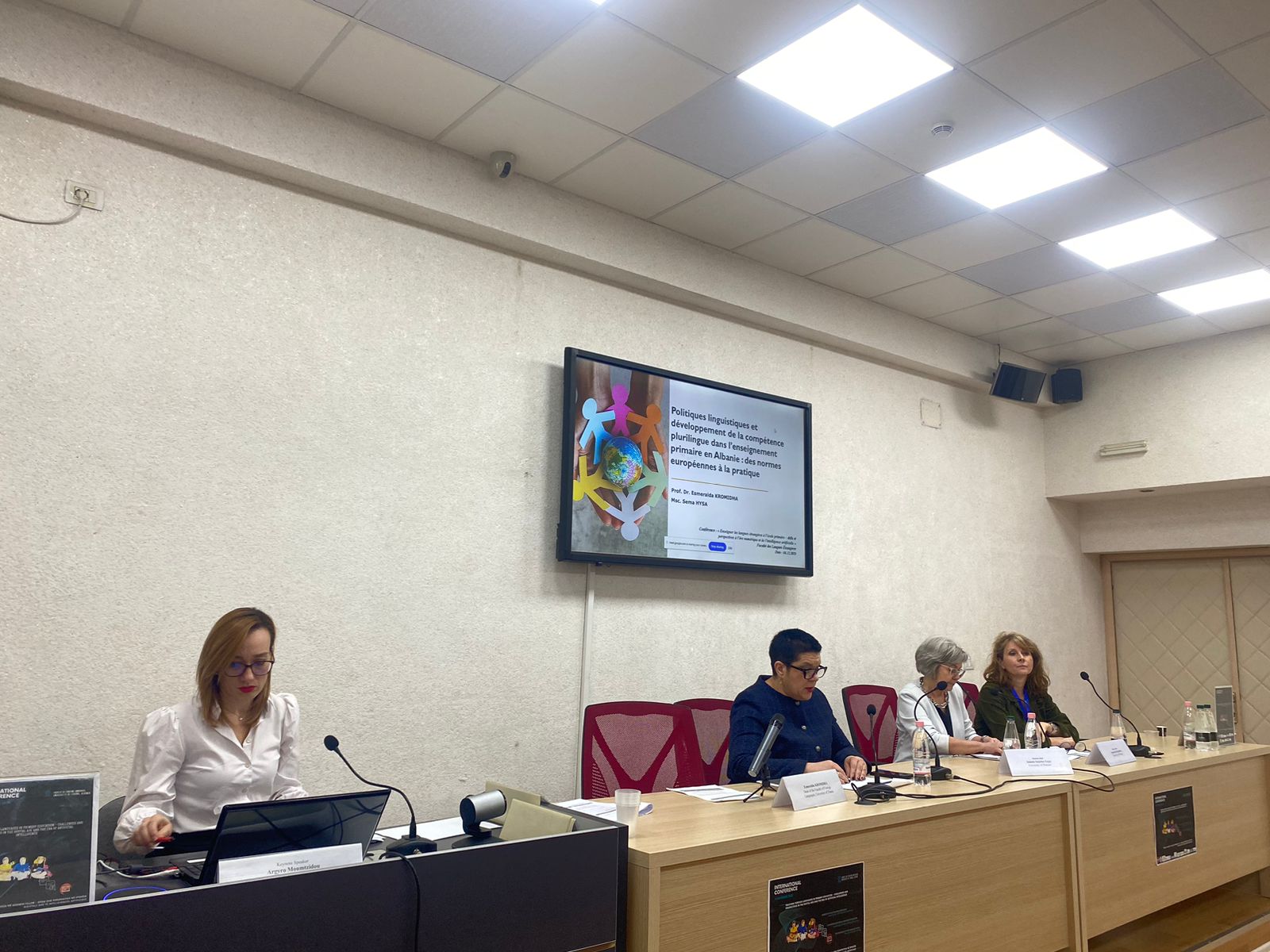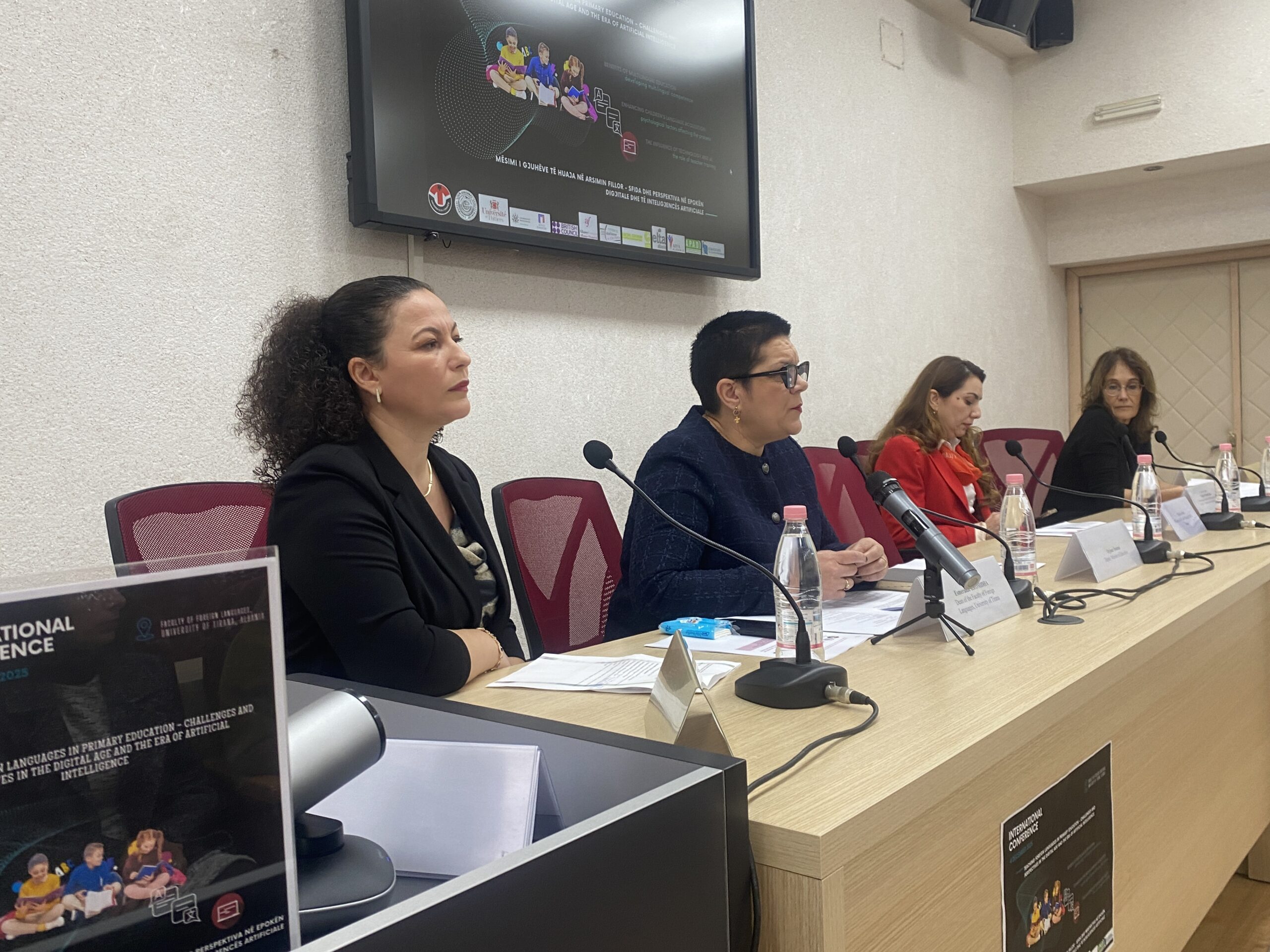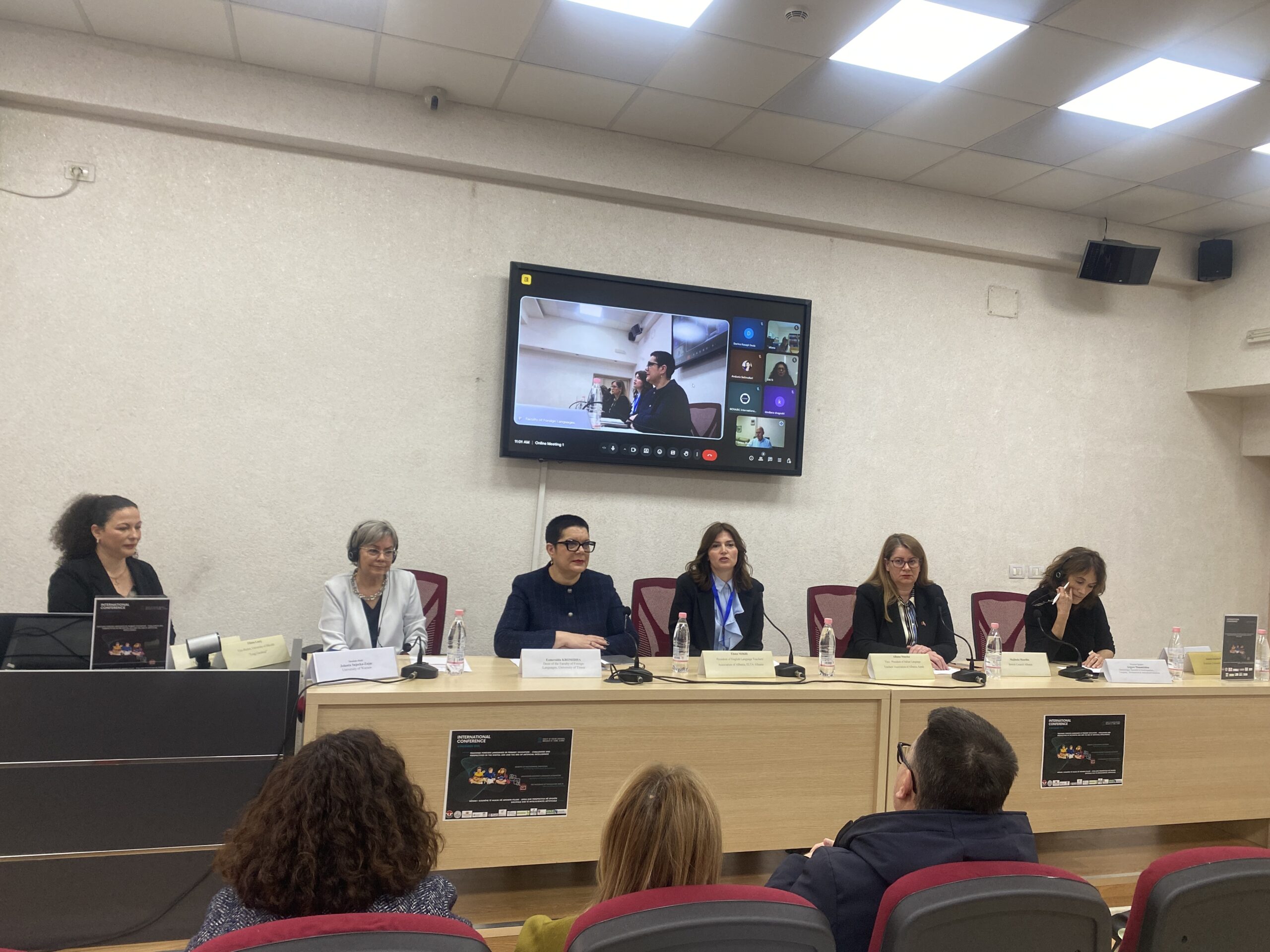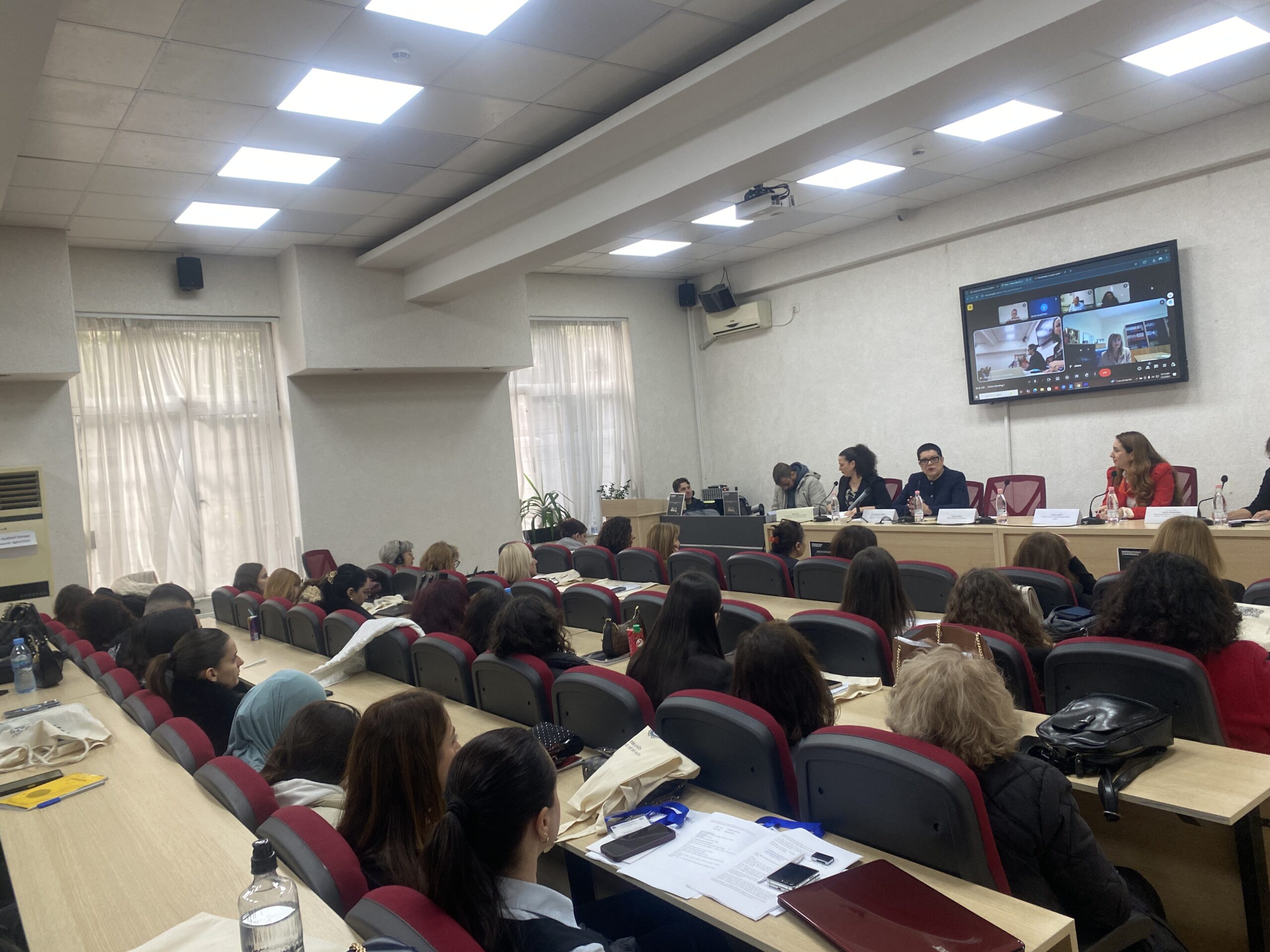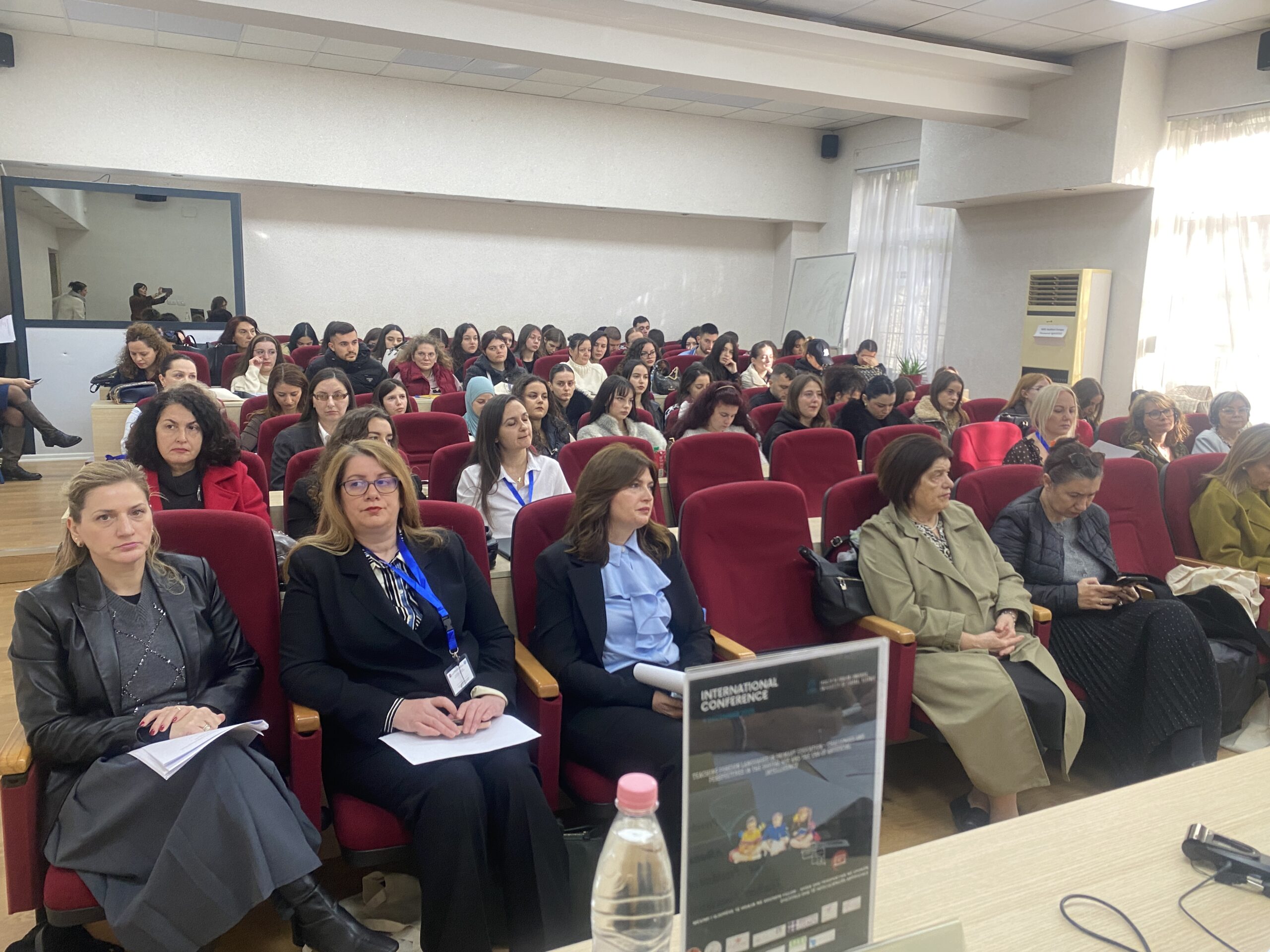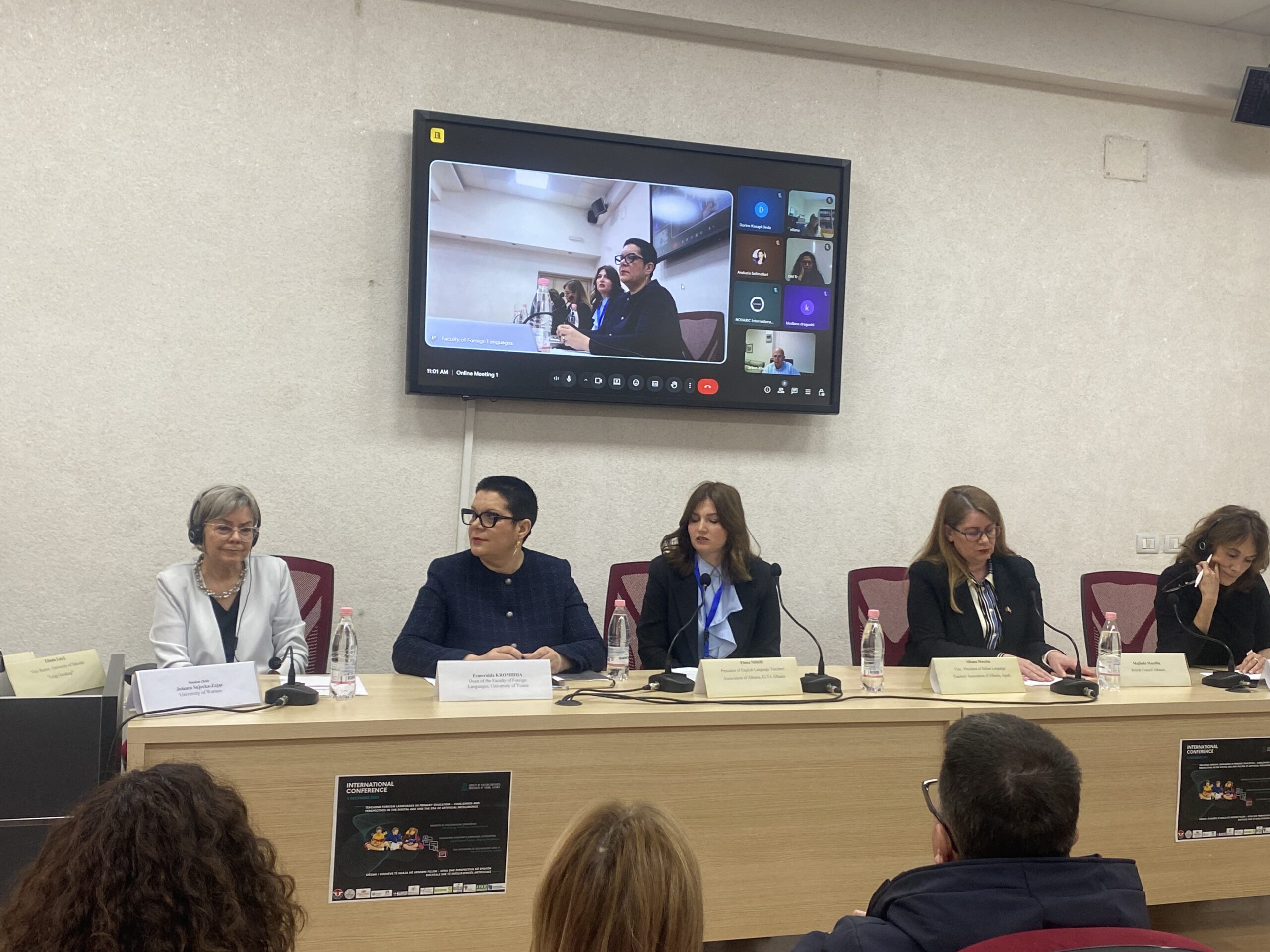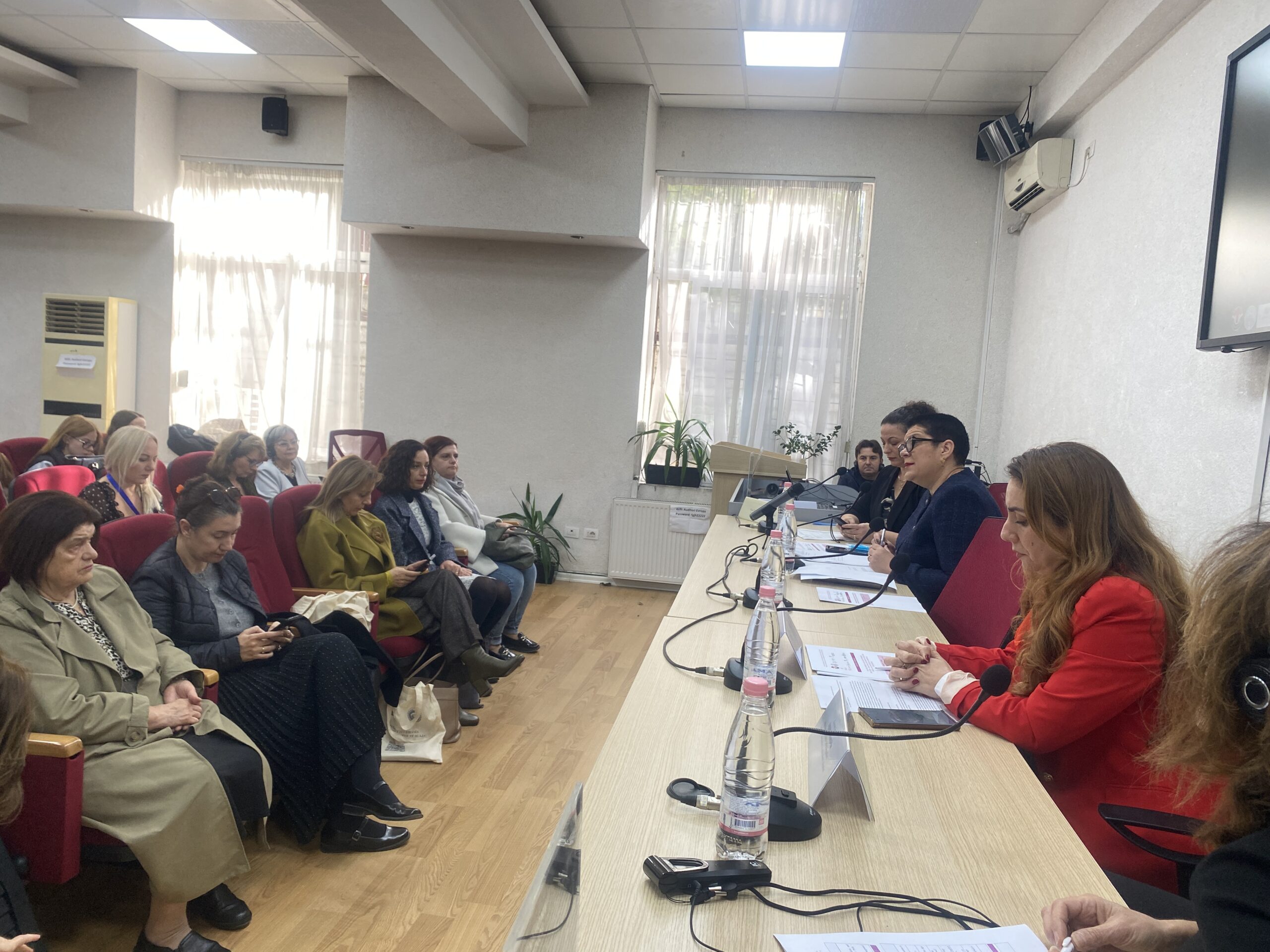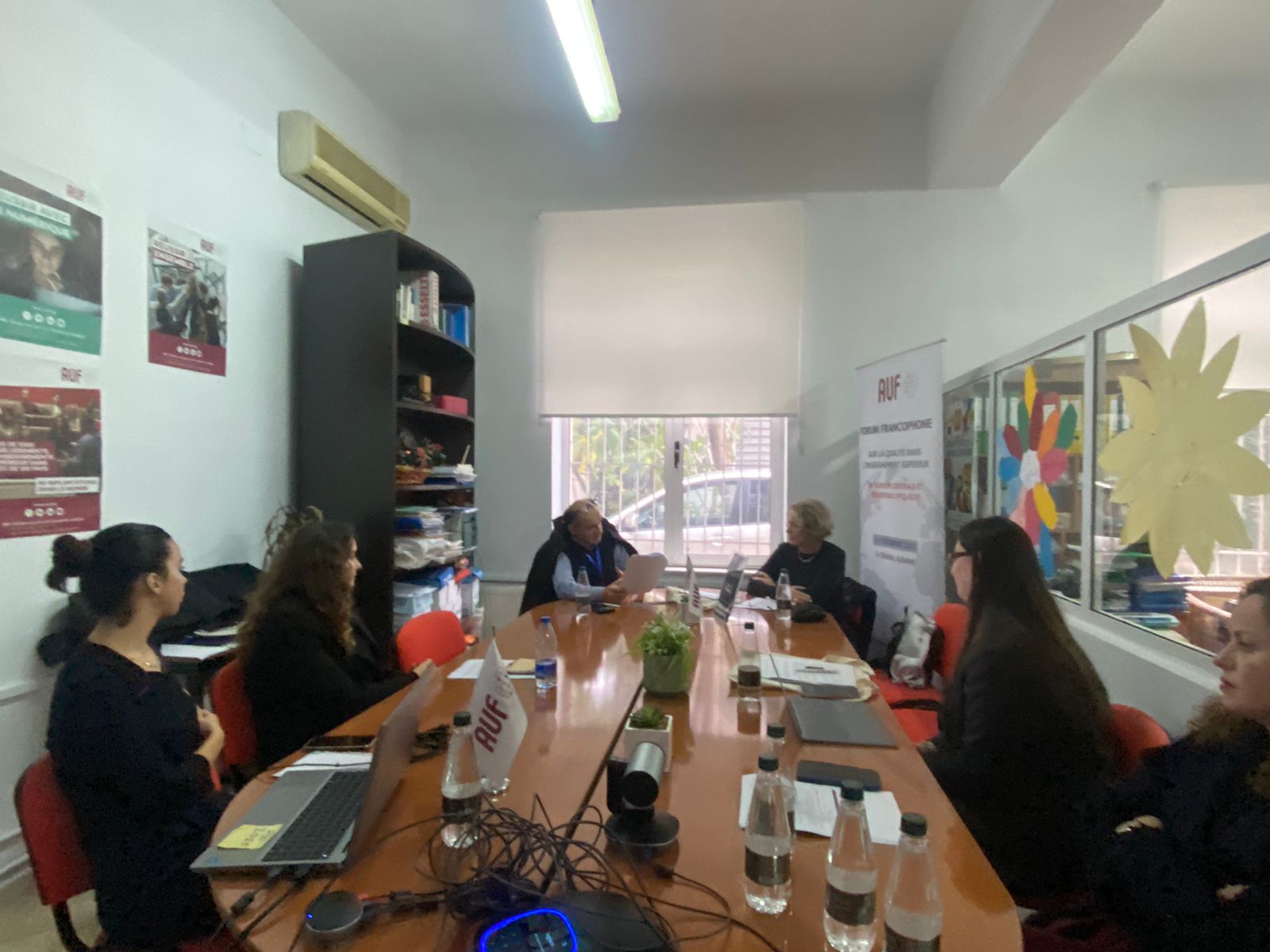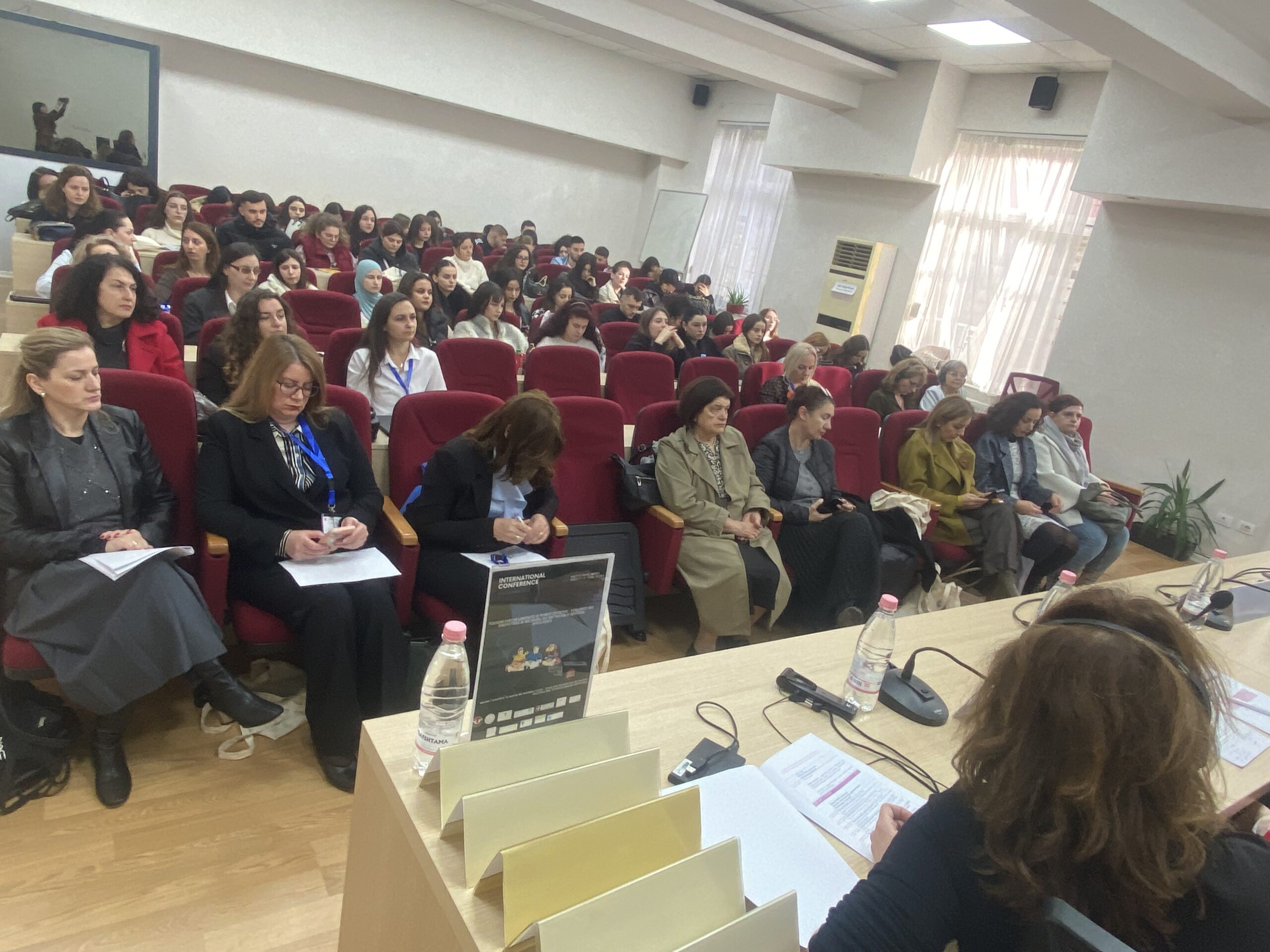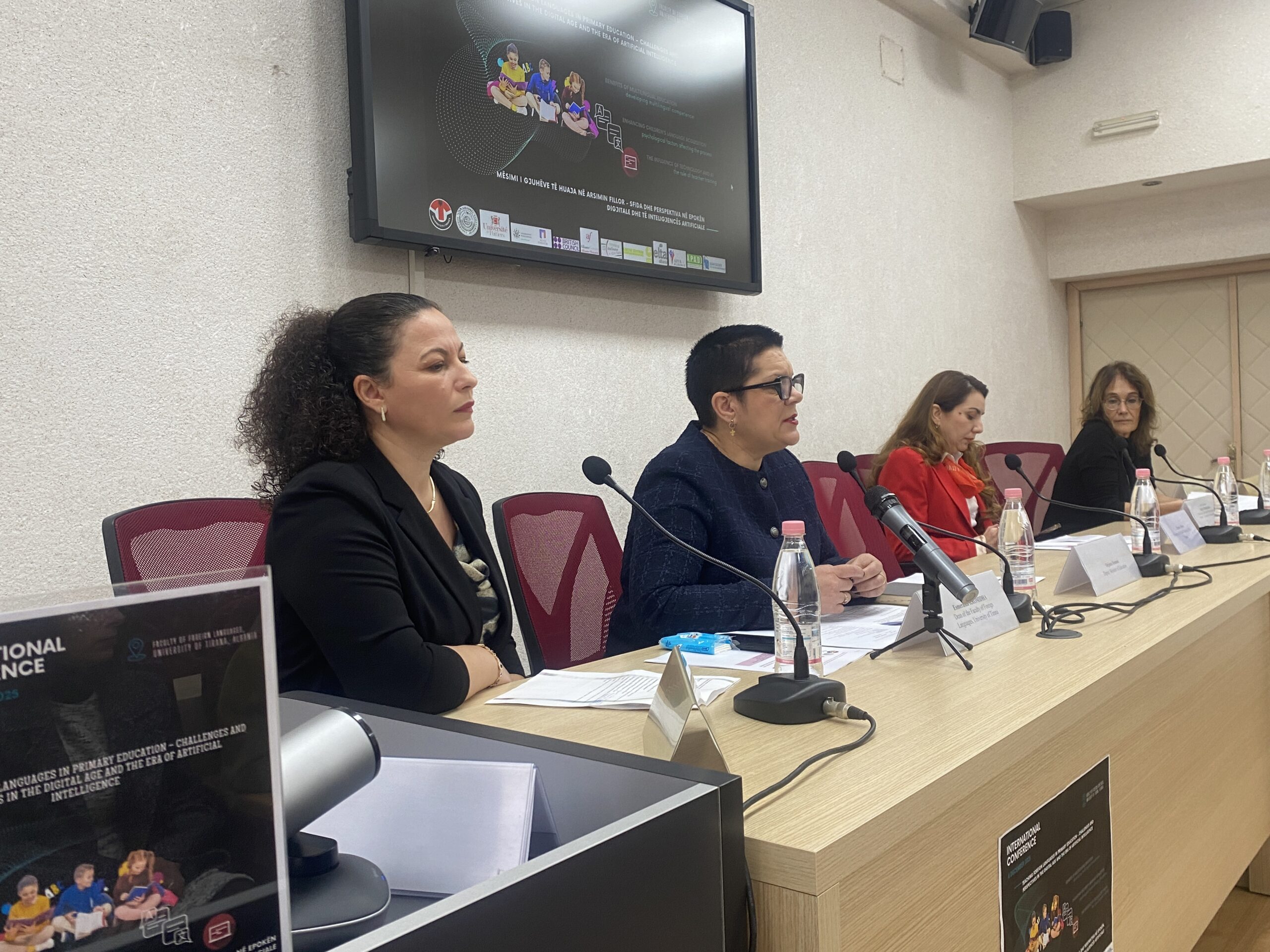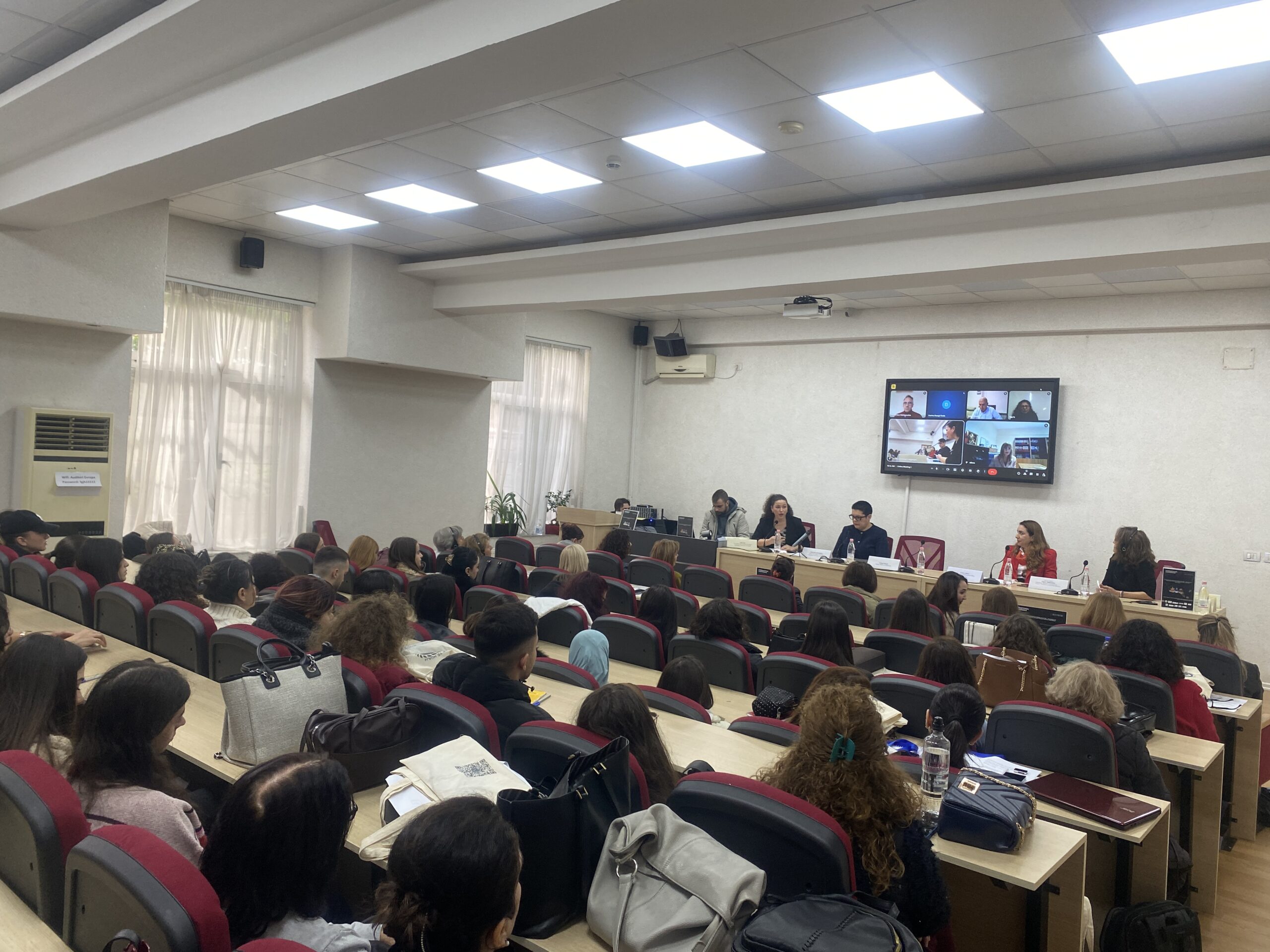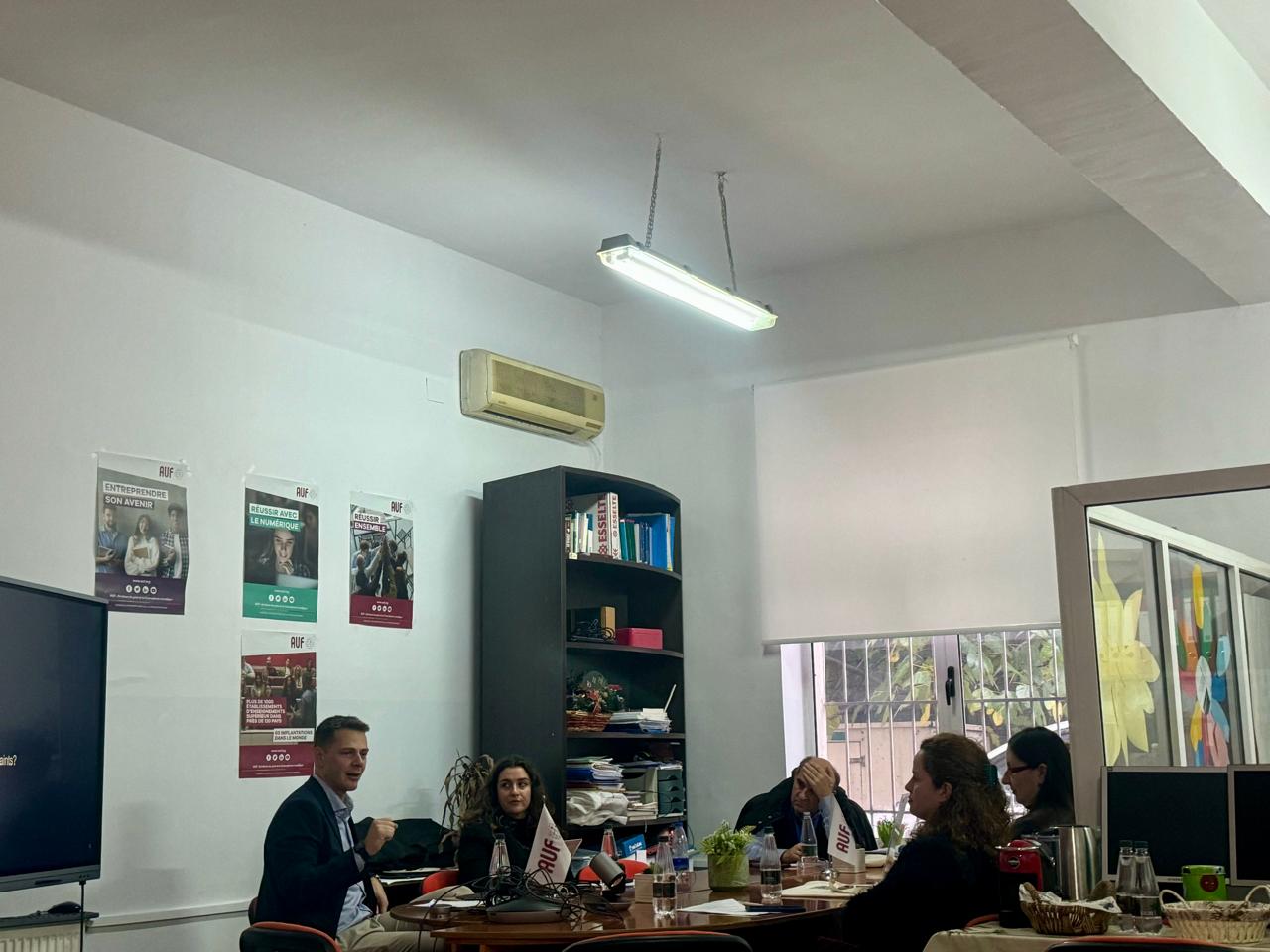

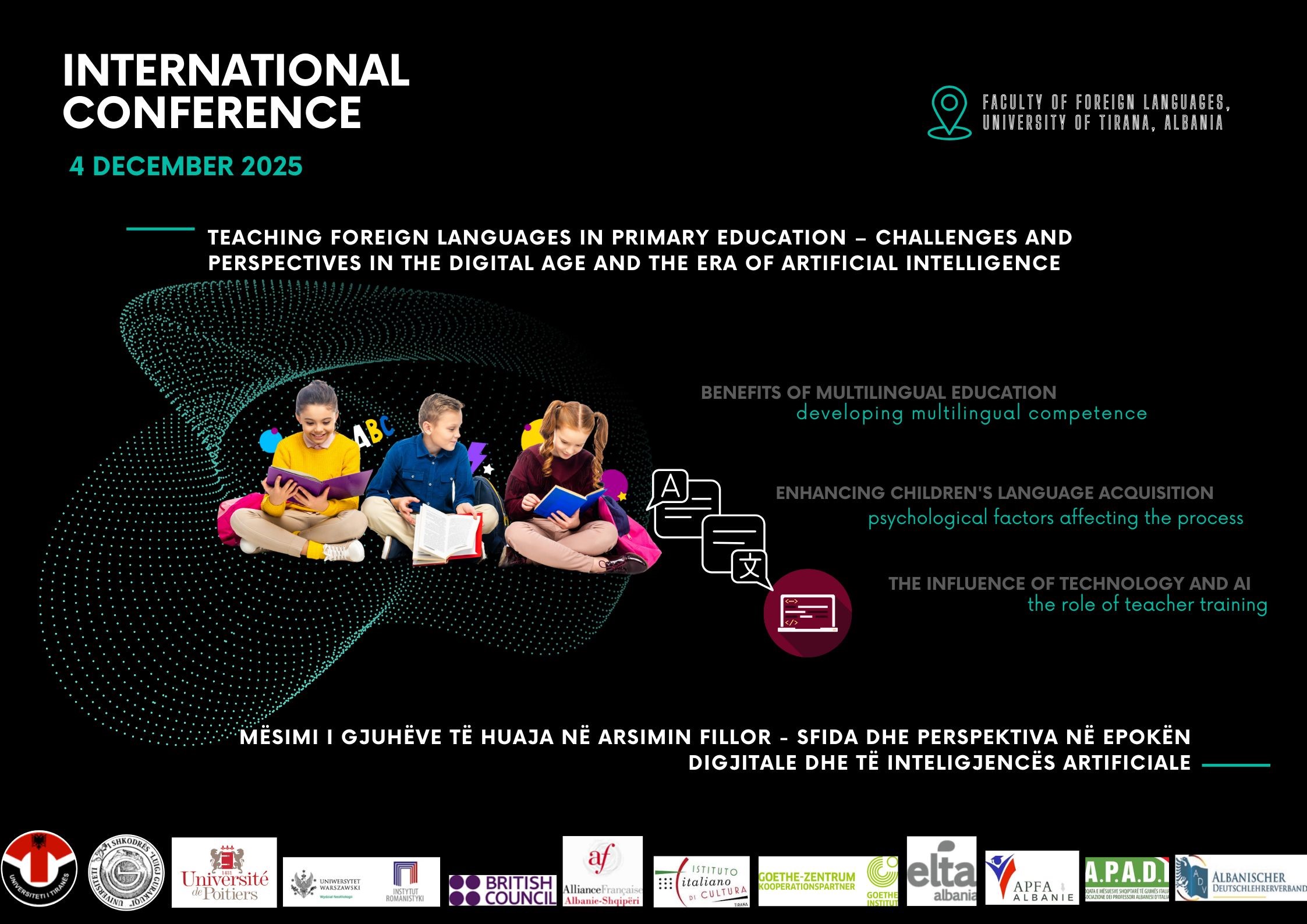
Më 4 dhjetor 2025, në sallën EUROPA të Fakultetit të Gjuhëve të Huaja, Universiteti i Tiranës, u mbajt me sukses konferenca ndërkombëtare “Mësimdhënia e Gjuhëve të Huaja në Arsimin Fillor – Sfida dhe Perspektiva në Epokën Digjitale dhe të Inteligjencës Artificiale”. Ngjarja mblodhi akademikë, studiues, mësues dhe përfaqësues institucionesh kombëtare dhe ndërkombëtare.
Fjalët përshëndetëse u mbajtën nga:
- Prof. Dr. Esmeralda Kromidha, Dekane e Fakultetit të Gjuhëve të Huaja
- Znj. Orjana Osmani, Zëvendësministre e Arsimit
- Znj. Ermira Milori, Drejtore e Zyrës Vendore Arsimore Tiranë
Konferenca u nderua gjithashtu nga përfaqësues të institucioneve kombëtare dhe ndërkombëtare:
- Eliana Laçej, Zv. Rektore, Universiteti i Shkodrës “Luigj Gurakuqi”
- Freiderikos Valetopoulos, Universiteti i Poitiers, Francë
- Jolanta Sujecka-Zając, Universiteti i Varshavës, Poloni
- Majlinda Mazelliu, British Council Albania
- Dritan Xhelili, Alliance Française e Tiranës
- Elona Mëhilli, Shoqata e Mësuesve të Gjuhës Angleze të Shqipërisë (ELTA Albania)
- Lindita Trashani, Shoqata e Mësuesve të Mësuesve të Gjuhës Frënge të Shqipërisë (APFA Albania)
- Albana Muçeku, Shoqata e Mësuesve të Gjuhës Italiane të Shqipërisë (APADI)
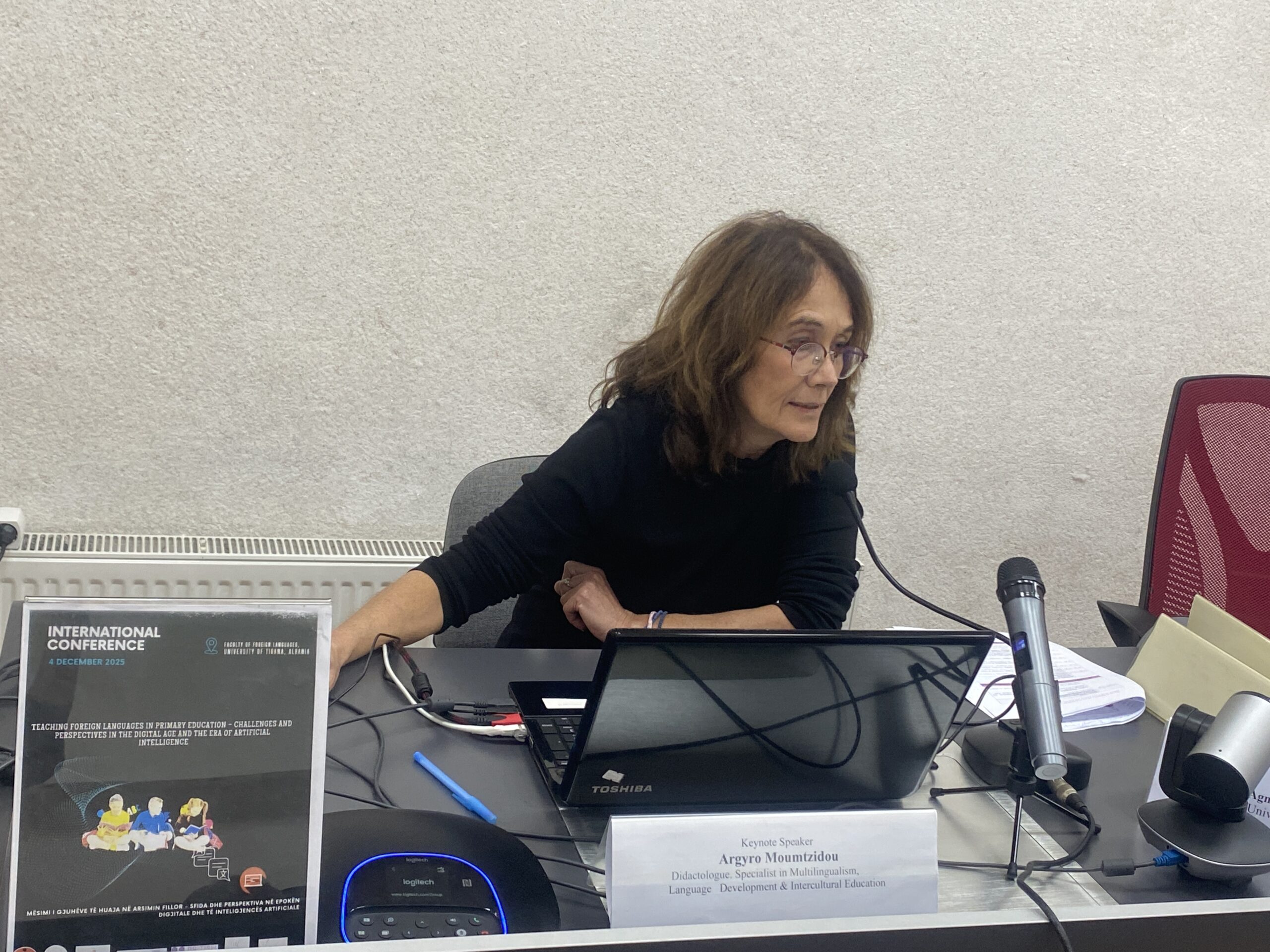
Sesioni plenar u hap me ligjëratën e ftuar të Argyro Moumtzidou, e cila trajtoi lidhjen gjuhë–mendje–kulturë dhe qasjet e integruara në zhvillimin e aftësive shumëgjuhësore dhe ndërkulturore.
Gjatë sesioneve shkencore u trajtuan tema të rëndësishme bashkëkohore, përfshirë:
- politikat gjuhësore dhe zhvillimi i kompetencave shumëgjuhësore te fëmijët;
- faktorët emocionalë në të nxënit gjuhësor në moshë të hershme;
- kreativiteti dhe roli i inteligjencës artificiale në mësimdhënien e gjuhës së huaj;
- edukimi dygjuhësh dhe zhvillimi i komunikimit verbal;
- loja si mjet për rritjen e motivimit;
- përdorimi i mjeteve digjitale, AI dhe chatbot-ëve në fjalëformim dhe të nxënit aktiv;
- përfitimet ekonomike dhe strategjike të shumëgjuhësisë së hershme;
- integrimi i teknologjive të avancuara, përfshirë AI Voice Mode, në klasën e gjuhëve të huaja.
Në mbyllje, pjesëmarrësit theksuan rëndësinë e bashkëpunimit ndërinstitucional, zhvillimit të qasjeve inovative dhe fuqizimit të kërkimit shkencor në fushën e edukimit gjuhësor. Konferenca hapi perspektiva të reja për projekte të përbashkëta, shkëmbime akademike dhe integrimin e teknologjive të reja në mësimdhënie, duke përforcuar vizionin për një arsim shumëgjuhësh, gjithëpërfshirës dhe të orientuar drejt së ardhmes.
International Conference “Teaching Foreign Languages in Primary Education – Challenges and Perspectives in the Digital Age and the Era of Artificial Intelligence”
4 December 2025 – Faculty of Foreign Languages, University of Tirana
On 4 December 2025, in the EUROPA Hall of the Faculty of Foreign Languages at the University of Tirana, the international conference “Teaching Foreign Languages in Primary Education – Challenges and Perspectives in the Digital Age and the Era of Artificial Intelligence” was successfully held. The event brought together academics, researchers, teachers, and representatives of national and international institutions.
The opening remarks were delivered by:
- Prof. Dr. Esmeralda Kromidha, Dean of the Faculty of Foreign Languages
- Ms. Orjana Osmani, Deputy Minister of Education
- Ms. Ermira Milori, Director of the Local Education Office, Tirana
The conference was also honored by representatives of national and international partner institutions:
- Eliana Laçej, Vice-Rector, University of Shkodër “Luigj Gurakuqi”
- Freiderikos Valetopoulos, University of Poitiers, France
- Jolanta Sujecka-Zając, University of Warsaw, Poland
- Majlinda Mazelliu, British Council Albania
- Dritan Xhelili, Alliance Française of Tirana
- Elona Mëhilli, English Language Teachers’ Association of Albania (ELTA Albania)
- Lindita Trashani, French Language Teachers’ Association of Albania (APFA Albania)
- Albana Muçeku, Italian Language Teachers’ Association of Albania (APADI)
The plenary session opened with the keynote lecture by Argyro Moumtzidou, who addressed the interconnection between language–mind–culture and integrated approaches to the development of multilingual and intercultural competences.
Throughout the scientific sessions, participants explored key contemporary themes, including:
- language policies and the development of multilingual skills in children;
- emotional factors in early language learning;
- creativity and the role of artificial intelligence in foreign language teaching;
- bilingual education and verbal communication development;
- play as a tool for enhancing motivation;
- the use of digital tools, AI, and chatbots for vocabulary building and active learning;
- the economic and strategic benefits of early multilingualism;
- the integration of advanced technologies, including AI Voice Mode, in foreign language classrooms.
In closing, participants emphasized the importance of interinstitutional cooperation, innovative approaches, and strengthening scientific research in the field of language education. The conference opened new perspectives for joint projects, academic exchanges, and the integration of emerging technologies into teaching, reinforcing the vision of a multilingual, inclusive, and future-oriented education system.